
News & Stories
Autumn 2026 Participant Newsletter
Using AI to understand the link between benign breast disease and breast cancer risk
Benign breast diseases are conditions that affect the breast but are not cancer. They include breast cysts, lumps, fibroadenomas and other (non-cancerous) changes in breast tissue. Most benign breast conditions are not life-threatening, and having a benign breast condition does not mean that a person will develop breast cancer. However, some types of benign breast disease are linked to a higher risk of developing breast cancer in the future.
Previous research has shown that certain changes in breast tissue may be associated with higher levels of breast cancer risk. For example, common breast tissue changes where the cells are not multiplying more than usual, are linked to little or no increase in risk, while others, particularly those involving unusual or abnormal-looking cells, may be linked to a greater risk.
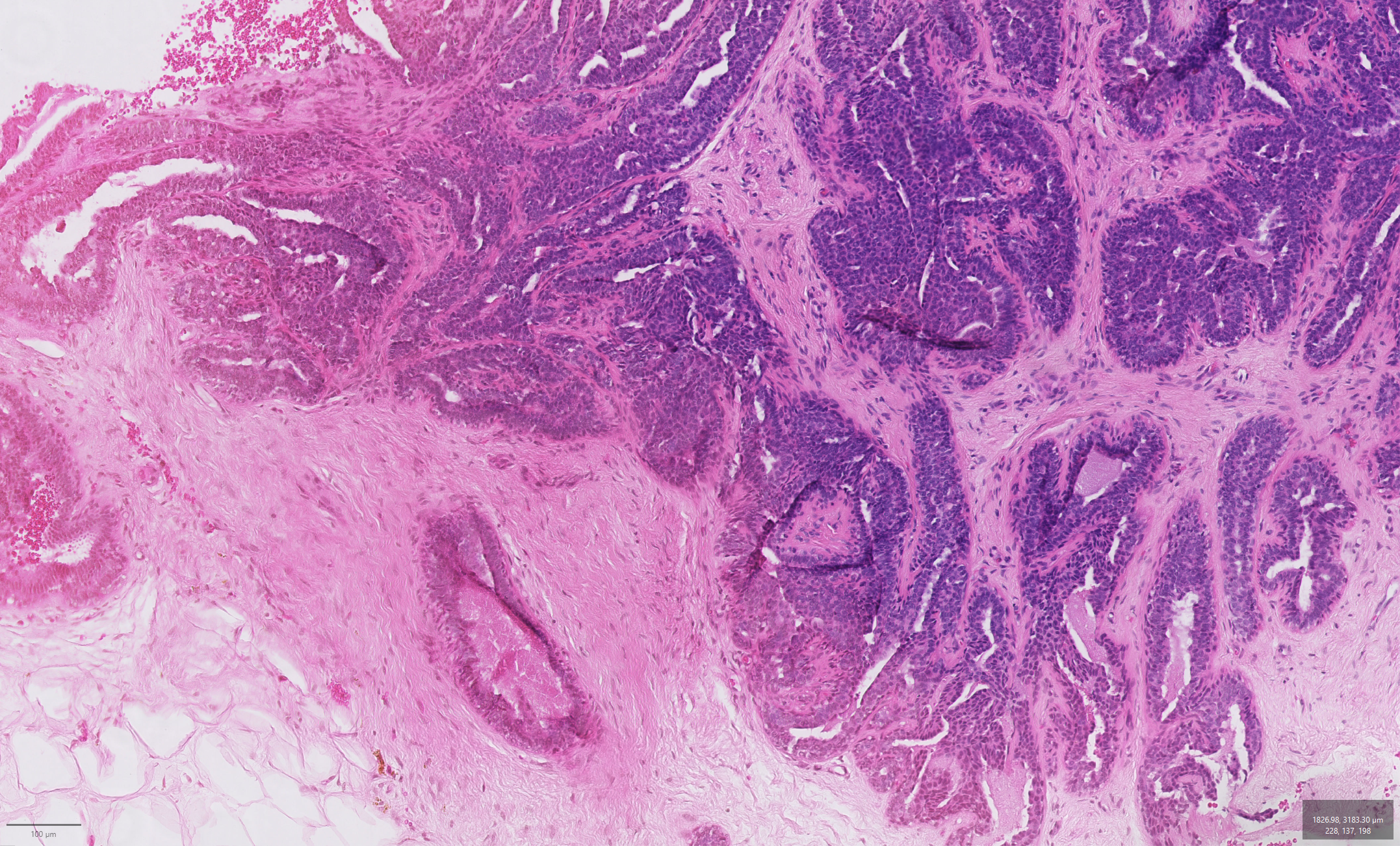
We are carrying out research in the Breast Cancer Now Generations Study to better understand these breast tissue changes. We are particularly interested in how lifestyle, environmental and genetic factors may be related to these changes in breast tissue, and whether these changes can help us understand a person's future risk of developing breast cancer.
For this research, we are using images of breast tissue samples from study participants who previously had a biopsy or surgery to diagnose or treat a benign breast disease, and who consented to the research team accessing these samples.
We will use AI to help analyse the images of the breast tissue. AI can assist researchers examine large numbers of images and identify patterns or tissue changes that may be difficult for the human eye to recognise. We will investigate whether any of these features in the image of the tissue are linked to the development of breast cancer later in life. If our findings are confirmed by future research, AI analyses of benign breast disease tissue images could be used to identify women who are at higher risk of developing breast cancer.
The results may help healthcare professionals to offer some women advice on prevention or more personalised screening.