
News & Stories
Autumn 2025 Participant Newsletter
Meet fellow participants who have undergone mastectomies
Below are three stories from individuals who underwent genetic testing and were offered mastectomy because, at their level of risk, the potential benefits were thought to outweigh the possible downsides. It’s important to note that there are many strategies available to reduce the risk of breast cancer. We are not advocating for any approach - as these stories show - each person’s journey and decision is unique.
Kirsteen
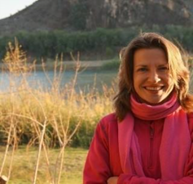
Kirsteen joined the Breast Cancer Now Generations Study to support research. Having family history of breast cancer and a BRCA2 mutation, she chose to undergo preventive surgeries. She shares her story and stresses the value of counselling to fully understand the impact of a positive genetic result for breast cancer.
-
Participating in the Breast Cancer Now Generations Study was an easy decision. Having a family history of breast cancer and testing positive for the BRCA2 gene mutation myself, taking part in the study was a way for me to directly contribute to research into the causes of breast cancer. It has also provided further reassurance that lifestyle factors can play a huge role in your risk of all cancers, not just breast cancer, as well as general health, and these factors are something that are within my control to a large extent.
I started working for the NHS as a hospital medical secretary when I left school. I’ve long been fascinated by wildlife in general as well as African wildlife. I travelled to South Africa for the first time in 2005 to volunteer at a wildlife rehabilitation centre and the country, its people and wildlife got under my skin and into my heart! Several return trips later, I met my partner in 2009 while on a volunteer placement working with local and Bushman communities in the Kalahari. The rest as they say, is history! We lived in South Africa for seven years before my partner’s work took us to Perth, Western Australia, where I worked remotely as a medical secretary for oncology units across the country. We later moved back to my homeland of Scotland where I spent six years working for a GP practice. For the last 18 months we’ve been travelling around Southern Africa in our Landcruiser called Gloria - named after Gloria the hippo in the movie Madagascar who is also big, grey, chunky and beautiful! I have a younger brother and two nephews, and three grown up stepsons and two granddaughters. I love all wildlife but have a huge soft spot for dogs, and I also enjoy music and reading.
One of the NHS consultants I worked for in gynaecology was involved in a joint clinic with the NHS Genetics Service for women with ovarian and/or breast cancer or a family history. This was where I first heard of a possible genetic link. My maternal grandmother died of breast cancer and grandfather of prostate cancer. My mum herself was diagnosed with breast cancer at the age of 35 but is thankfully still going strong today at age 76! Following a brief chat with that consultant about our family history, she advised me to seek a referral to the NHS Genetics Service which I did. I was in my early 20s at that point and was advised to have annual screening with mammograms/examination at the Breast Clinic.
Fast forward to 2010, aged 37, I was re-referred to the NHS Genetics Service to review our genetic history and get advice regarding ongoing screening. At that point it was felt that our family history did not meet the criteria for NHS testing for mutations in BRCA1 and BRCA2 genes. However, having had breast cancer herself, my mum was asked if she’d like to take part in a local study looking at both BRCA genes as well as other genes possibly involved in the development of breast cancer. She accepted and in 2011 we were informed that she was positive for BRCA2. Mum’s positive result meant that I was now eligible for NHS testing which I was offered and did in 2011. Later that year I was also found to have the BRCA2 gene mutation. I was advised to have my ovaries removed before the age of 40 and to consider either long-term breast screening with regular MRI and mammography or preventative breast surgery. Ultimately in 2012 at the age of 38, I chose to undergo a total abdominal hysterectomy and bilateral salpingo-oophorectomy as well as bilateral prophylactic mastectomy with reconstruction and implants - these surgeries were done in South Africa where we were living at the time.
I genuinely have no regrets about being tested or the choices I’ve made with regard to surgery versus screening. Having my granny die from breast cancer in her early 60s and just months later, my own mum diagnosed with the same disease when I was around age 11, I think to some extent I grew up feeling that my breasts could perhaps become problematic. Thanks to mum being brave enough to take part in a local study, I was ultimately able to be tested myself. My personality is such that I don’t like “what ifs” and would rather know my genetic status. I know my mum has felt guilt about my positive result but the BRCA2 mutation didn’t start with her. We will never know exactly where in the family it came from and any samples remaining from my grandparents are no longer available/suitable for testing. That’s okay though, it’s what we know now that’s important, and for me that knowledge is power.
The way I see it, I’ve done everything possible surgically, based on the recommendations I received at the time, to try and minimise my risks. I also try where I can (and I’m by no means perfect!) to look after my health - have never smoked, don’t drink a lot, try to have a healthy diet and do some exercise, etc. That’s all I can do and I’m okay with that.
Deciding whether to be tested and, if you go ahead and get a positive result, deciding to opt for screening or definitive surgery if advised/available, are very personal decisions. I’ve had several people say to me that they don’t understand people who get tested as they’d rather not know. Others have questioned why I would have surgery when my body was otherwise healthy. Why not just opt for screening? These are all valid opinions however I felt that I couldn’t cope with the constant rollercoaster of regular screening and the worry about what if “this time” something shows up. It’s now 13 years since my surgery and I still feel I did the right thing for me. At 52 years of age now, I’ve had 17 cancer-free years that my mum didn’t have. Whether or not that’s a direct result of my choice to have surgery I’ll never know, I just consider myself very fortunate to have had them and hope for many more to come. My advice to anyone facing these huge and complicated decisions is, take as much time as you need to think about the information you’ve been given as there are pros and cons for each option, ask questions - however many it takes - and then do what’s best for you.
Lana
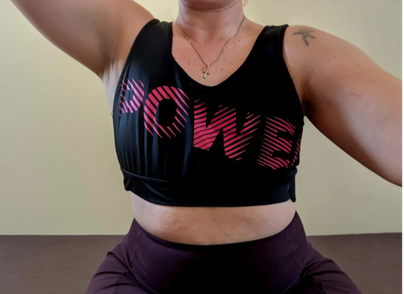
Lana joined the Breast Cancer Now Generations Study at age 24. Due to her high family risk of breast cancer, she was approved for genetic testing and a mastectomy before turning 30. She shares her story to raise awareness of the important mental health benefits of mastectomy, urging a shift away from overvaluing cosmetic concerns and reluctance to remove “healthy” tissue.
-
I signed up to the Breast Cancer Now Generations study for primarily selfish reasons at the age of 24. I knew I was at very high risk due to my family history, and I believed the study might give me access to genetic testing and/or increased surveillance.
After being lucky enough to get approved for the genetic testing and risk-reducing mastectomies through the NHS, I can now see beyond the immediacy of my own survival. By continuing to participate, I hope my data may help contribute to more women having access to cancer preventative strategies.
I have found the process of participating in the Generations Study fascinating and love how they really involve and listen to the study participants.
I live with my husband and two younger children, work as an actor and in a community food pantry and am a passionate environmentalist.
I watched breast cancer rip through my family from a young age, with seven affected relatives, young ages, bilateral disease and one ovarian. From the moment I read a magazine article in my teens about someone who had preventative mastectomy, I fought tooth and nail to get this for myself. I didn’t want to be next; I didn’t want to die. I decided that if I reached 30 with no luck getting it through the NHS, I would fund the procedure privately, however I was fortunate enough to eventually be approved for the genetic testing and mastectomy at 29 and had the operation 3 weeks before I turned 30.
The one wrinkle was that on the morning of my surgery, the consultant came round and said that unless I signed the consent form for silicone implants, which I didn’t want, she would cancel my operation as “we can’t let a 29-year-old woman walk out of here flat chested!"
I had a split second to decide, and I chose life, because whilst the implants might be uncomfortable and a nuisance, they had no malignant potential, and once my breasts were gone, I could pursue removal of these without the death clock ticking. It took several more years and the mention of legal action to get the foreign bodies removed, and I do have a lot of loose skin on my chest which could have been avoided had they just closed up neatly, however it was never about how I looked, and I remain super thankful to now be completely free
My risk was very much played down and minimised by clinicians; first they claimed it was just bad luck that so many people in one family had the same type of cancer, and when that would no longer fly, it was “well it’s on your dad’s side, and paternal history doesn’t count”. Fortunately, I was very well informed and able to argue my corner, knowing that neither of these was true.
I was told by one consultant that if I removed my breasts, my husband would no longer find me attractive and would probably leave me, and nobody else would want me either - because clearly that was the only thing going for me and a dealbreaker in any relationship! I told him that even if he was right and I was basically going to die alone and get eaten by my cats, I would rather be cat food at 85 than worm food at 35.
I feel there should be more frank and honest discussions with patients about their individual risk, more listening, and more respecting and facilitating of patient choice rather than surgeons imposing their own beliefs about what is best.
I wish there was greater awareness of the mental health benefits of mastectomy rather than the overvaluing of cosmesis and aversion to removing “healthy” tissue, whose continued presence is causing profound psychological distress and necessitating traumatic and repeated screenings with a high chance of cancer subsequently developing.
I hope that enough women with risk-reducing mastectomies are included in research to generate really good data about the effectiveness of the procedure, at least in terms of breast cancer prevention. It would also be fantastic if more information could be captured about the wider benefits around improved psychological wellbeing and reduced healthcare utilisation compared to women living with ongoing risk.
I would also like to see changes to some of the literature about risk reduction which completely neglects to mention mastectomy as an option, focusing solely on increased screening (essentially just waiting for cancer to develop) or other less effective treatments which often have toxic side effects, doesn’t avoid screening and precludes the use of oral contraceptive pill (which BRCA women value for mitigating ovarian risk).
Joanne
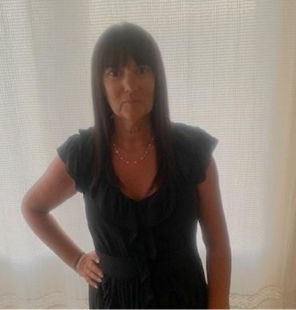
Joanne joined the Breast Cancer Now Generations Study to learn about breast cancer risk and prevention. After genetic testing revealed a high risk for breast cancer, she chose a preventative double mastectomy. Reflecting on her journey, she hopes that genetic testing becomes more accessible to support informed choices for others.
-
I joined the Breast Cancer Now Generations Study to have more information and learn about breast cancer risk and prevention, and I continue to participate to know more about new treatments and developments into helping to beat it
I have found the process of participating in the study to be extremely easy, and I look forward to receiving the Newsletters periodically with the study research updates which I find very interesting.
I am 52 years old and worked in banking for 34 years before being made redundant nearly 2 years ago. I am now a lady of leisure! I am married and we have a 13-year-old daughter, so I am very interested in the developments of breast cancer research for her, and especially the genetic risks involved.
I was 12 years old when my mum died from breast cancer at the age of 43. My maternal grandmother and her sister also died of breast cancer, so it was very prevalent on my mum’s side of the family.
I first became aware of genetic clinics and testing by reading about it, and for me, I felt it a no brainer to not pursue it. I really wanted to know if I was at risk and if so, what I was able to do to reduce this.
I found the whole experience easy and was very well informed throughout the process. The genetics team were very helpful and supportive. As there was no blood to evaluate from any surviving family members, it was decided that my blood would be tested for all known genetic mutations.
My results showed there to be no known mutations, such as BRCA 1 or 2, but, with no family blood to test, there was the possibility of other mutations that they could not see. I was informed that I had an 87 per cent chance of getting breast cancer.
This was too big a risk for me, so in 2008 I chose to have a preventative double mastectomy. I have never regretted my decision and without the help and support of the amazing genetics team, my decision would have been so much more difficult.
I really wish something like genetic testing had been available for my mum, so she could have had the choice I did.
The test results were sent to my doctor by letter and explained to me in detail. It is a huge decision to have genetic testing, and I feel that results should be explained face to face as it is such a momentous thing in someone’s life.
I’d like to thank the Breast Cancer Now Generations Study for allowing me to participate, and for all the wonderful work it does.